

The borough of Queens is a treasure trove of historic buildings. Here, you’ll find some of the oldest structures not only in New York but in the entire country. Discover more about these buildings—ranging from modest homes to farmhouses—on queens-future.com.
Riker-Lent-Smith Homestead and Cemetery
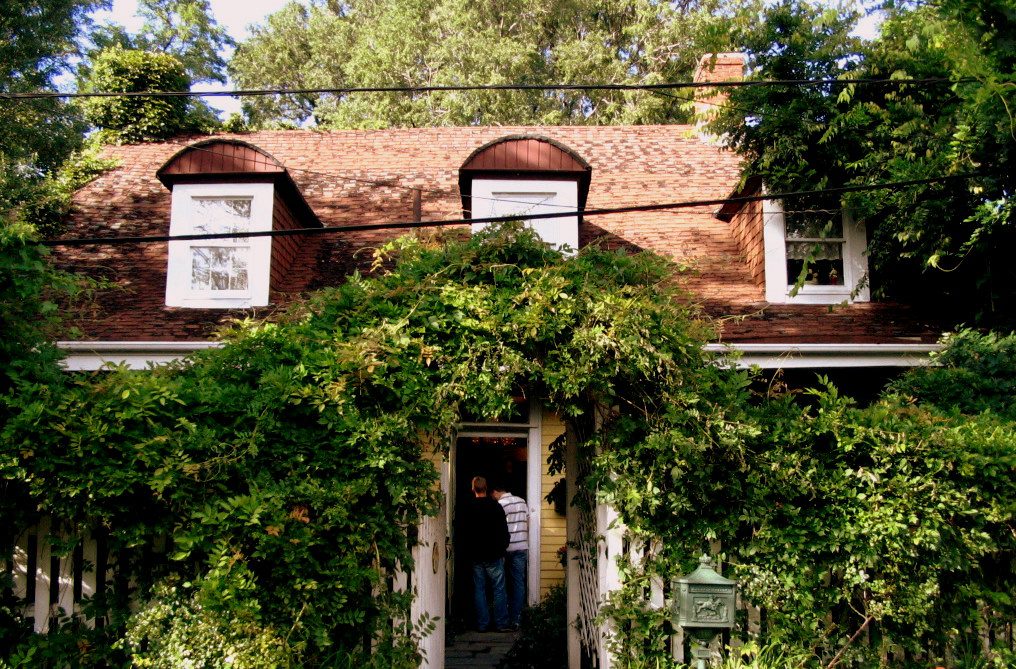
The Riker-Lent-Smith Homestead is the oldest residence in New York City still in use as a private home, located in East Elmhurst. Built in 1654 from wood and fieldstone, it originally featured a single room in the Dutch Colonial style, known for its steep roofs, large windows, and gable facades.
The home is named after its early residents, the Riker-Lent family, as well as the Smiths. The Riker-Lent family inhabited the home until the 20th century and were among the early settlers of New Amsterdam. Rikers Island, now the site of New York City’s main prison complex, was named after this family, who owned it until 1884. Later, the Rikers passed the home to family secretary William Gutt, and after his death, Michael Smith acquired the property. He passed away in 2010, but his wife Marion continued to reside there. Marion Smith started guided tours of the property, allowing visitors to explore the house, garden, and family cemetery. Note that in spring and summer, thick foliage may obscure the house from view.
Vander Ende-Onderdonk House
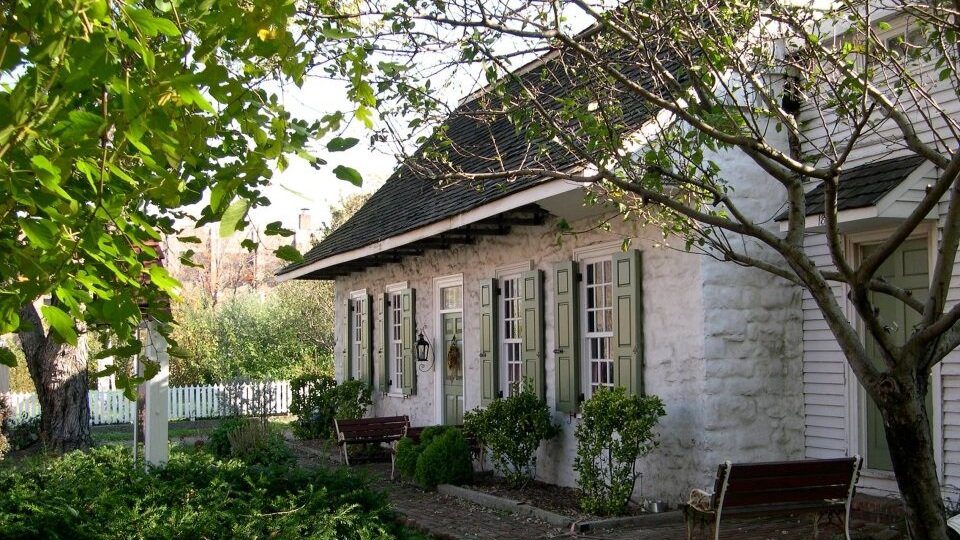
Built in 1661, the Vander Ende-Onderdonk House holds the title of the oldest Dutch Colonial stone house in New York City. Located in Ridgewood, it boasts architectural features such as a wood-shingled roof, Dutch doors, brick chimneys, a central hallway, and double-hung windows.
Hendrick Barents Smidt built the original house, but in 1709, Paulus Vander Ende expanded it, lending his name to the property. The house once served as a boundary marker between Kings and Queens Counties, with a boulder marking the border between Queens and Brooklyn. Originally, the estate included 100 acres of farmland, though the land was gradually sold off, leaving only two acres.
A severe fire in 1975 damaged much of the building’s woodwork. Two years later, it was listed on the National Register of Historic Places, and in the early 1980s, it was restored with federal funding. As a historic site, original tools were used in its reconstruction. Now, the Vander Ende-Onderdonk House serves as a museum open to the public, featuring archaeological artifacts found on-site.
John Bowne House
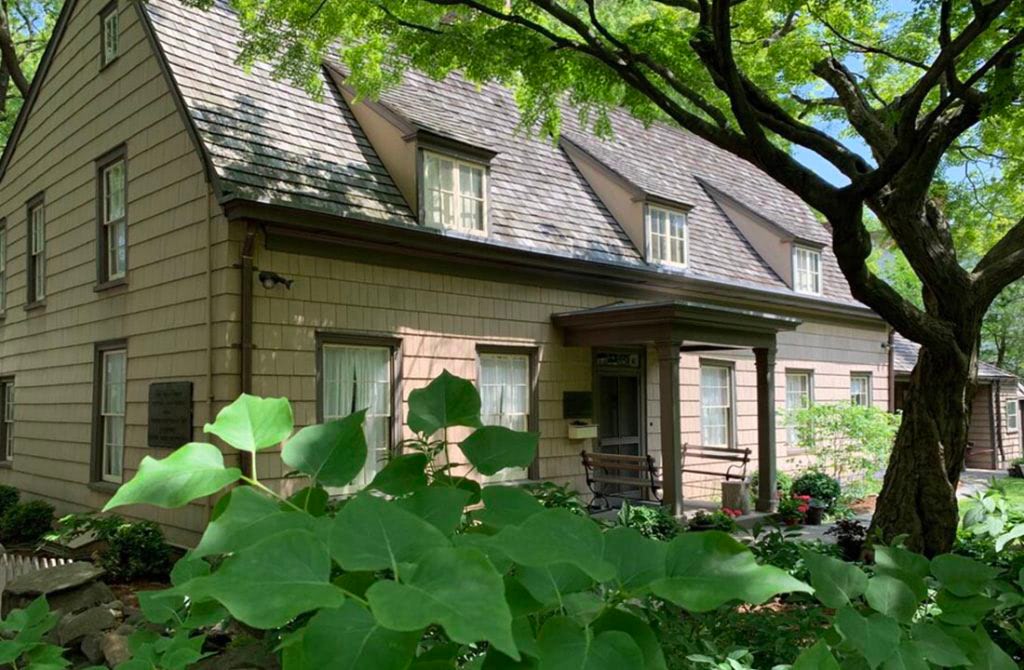
Located in Flushing, the John Bowne House was built the same year as the previous structure. This Anglo-Dutch colonial building, with its wooden frame, three dormer windows, and steep roof, was home to residents who fought for religious tolerance in the United States and advocated for racial freedom.
John Bowne, the first owner, was arrested for hosting Quaker meetings in the house. In 1662, such gatherings were prohibited by law. Bowne successfully contested his arrest, going on to make significant contributions to freedom of worship and speech. His great-grandson, Robert Bowne, was a noted abolitionist. Robert’s niece, Mary Bowne Parsons, and her husband Samuel Parsons helped enslaved individuals seeking freedom. Today, the John Bowne House is a museum containing about 5,000 original items, including art, furniture, and letters.
Old Quaker Meeting House
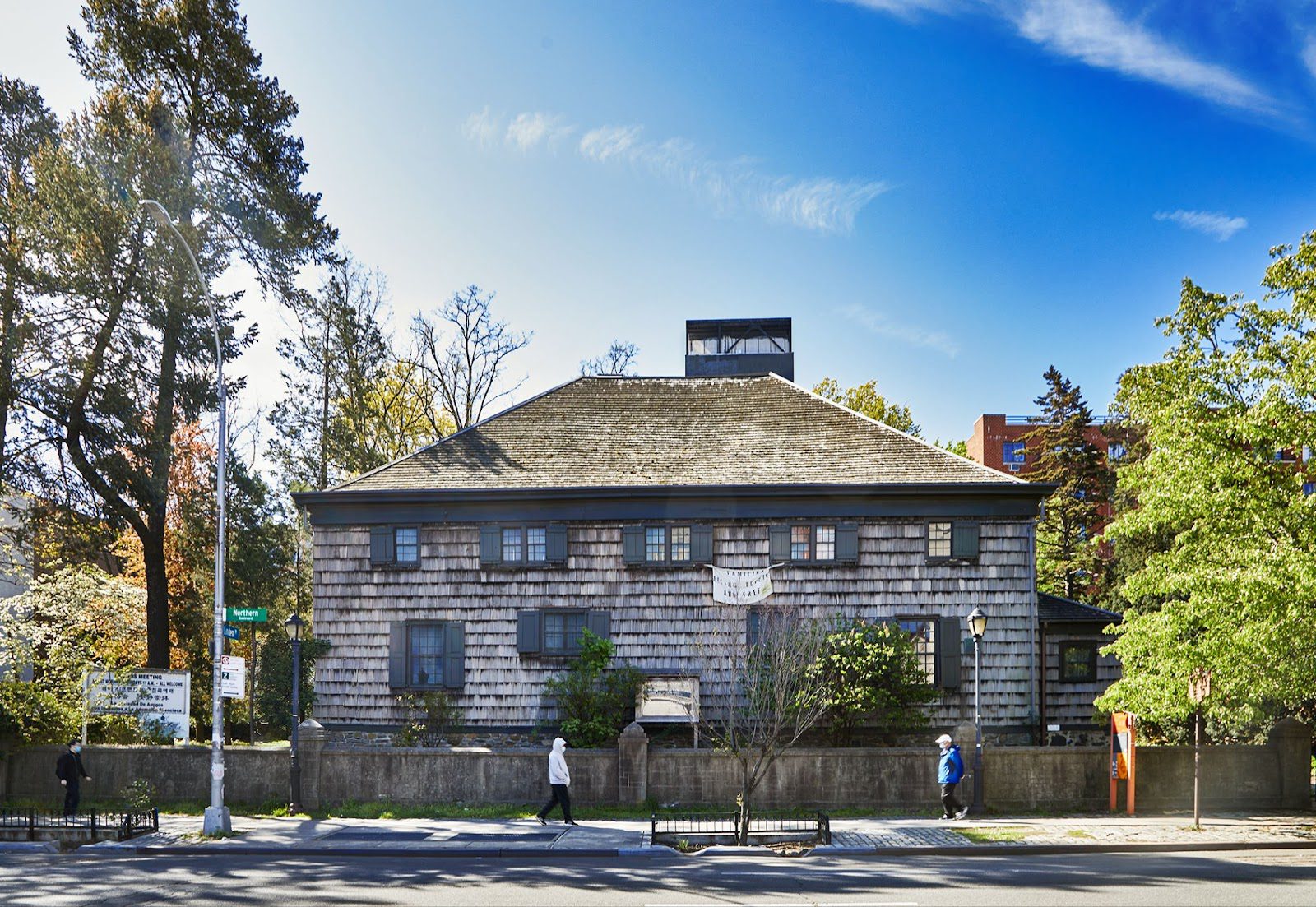
Built in 1694, the Old Quaker Meeting House served as the place of worship for the Flushing Meeting of the Religious Society of Friends, or Quakers. This building, like the previous one on this list, was a gathering place for Quakers. It features an extraordinarily steep four-sided roof, typical of medieval Dutch roofs, and a simple interior with dark wooden floors, unadorned benches, and an exposed beam ceiling.
The Old Quaker Meeting House was a center of advocacy for religious tolerance. It was here in 1657 that the Flushing Remonstrance, a petition signed by about 30 Flushing residents calling for the right to worship freely, was written. This influential document helped secure religious freedom in America and was a precursor to the freedom of religion clause in the U.S. Constitution’s Bill of Rights. The house and its residents also played a role in the abolitionist movement in New York. On the nearby cemetery lie prominent families, including John Bowne and his family. Every Sunday, the Old Quaker Meeting House welcomes attendees for worship services, followed by tours of the building and cemetery.
Cornelius Van Wyck House
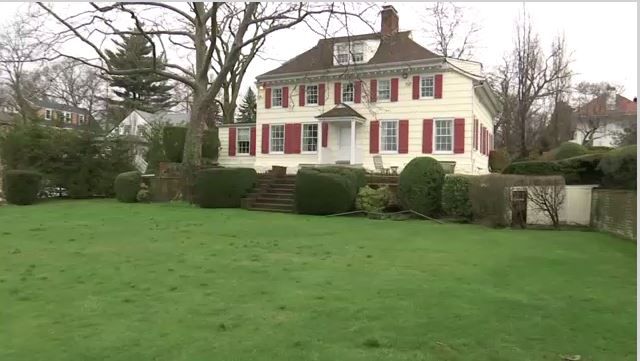
The Cornelius Van Wyck House in Douglaston overlooks Little Neck Bay on Long Island and exemplifies 18th-century Dutch Colonial style. The sitting room features Georgian fireplace mantels, and the house is surrounded by landscaped gardens leading to the beach.
Dutch American Cornelius Van Wyck built the original three-room structure in 1735, and the house has since undergone several expansions. During the American Revolutionary War, it housed the northern division headquarters of the Continental Army. Distinguished guests included U.S. founding fathers George Washington and Alexander Hamilton.
King Manor
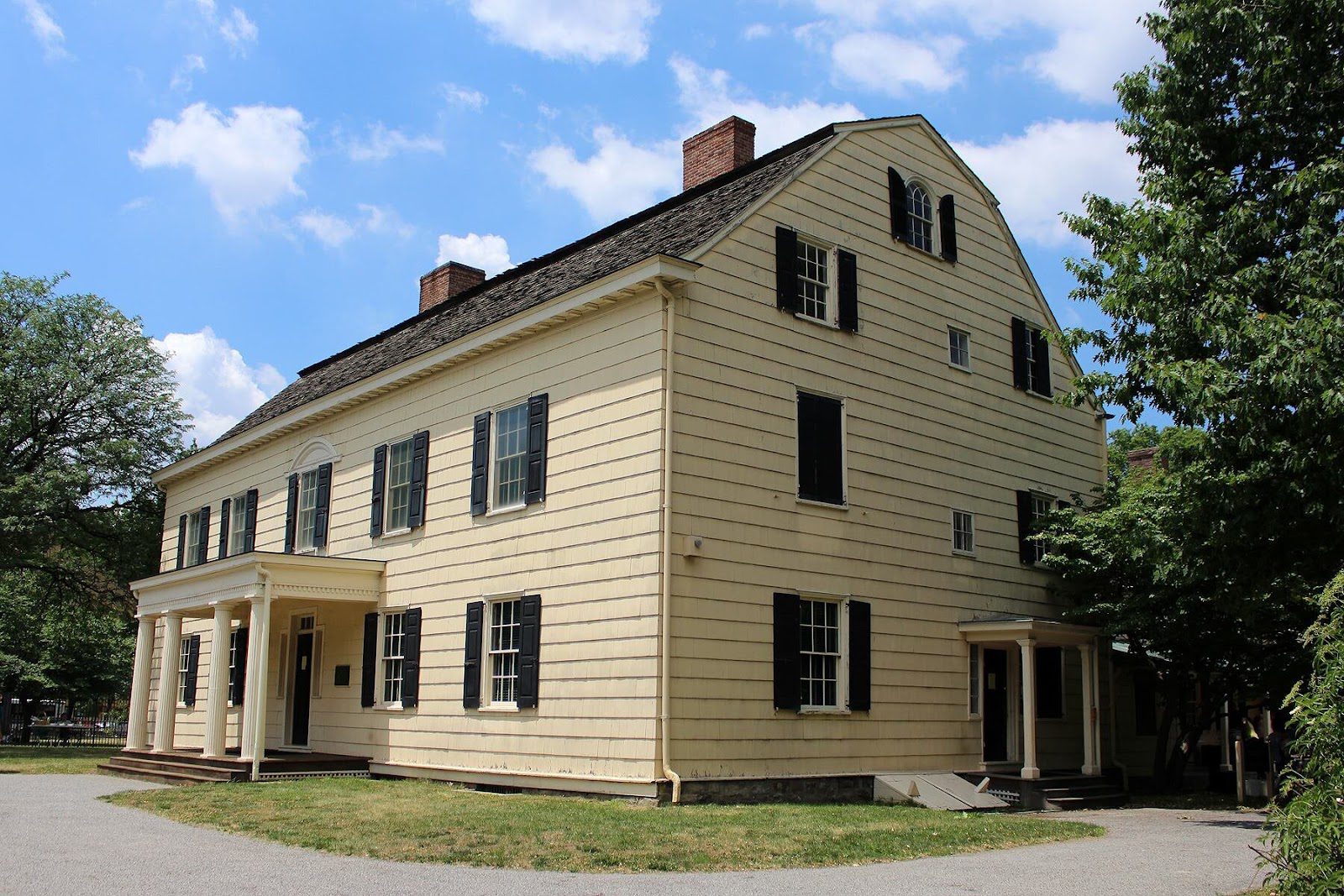
Built in Jamaica in 1750, King Manor is named after Rufus King, one of New York’s first senators, an ambassador to Great Britain, an abolitionist, and a signer of the U.S. Constitution. Initially serving as a farm residence, King and his wife bought the property in 1805 and expanded it from 90 to 122 acres. Having lived in England, King designed the grounds in a picturesque English style, featuring semicircular paths and clusters of decorative trees.
Today, King Manor functions as a museum dedicated to preserving King’s legacy and early American life in Jamaica. The museum hosts festivals, family programs, concerts, and workshops.
Queens County Farm Museum
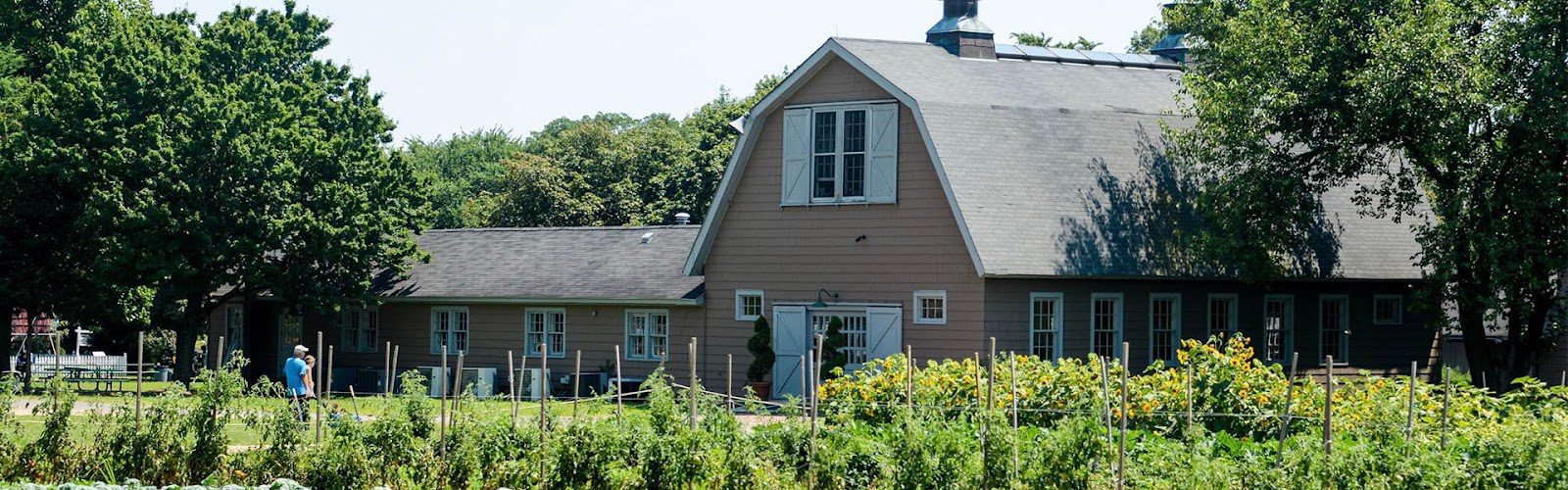
Amidst the historic Queens County Farm Museum stands one of the oldest houses in Queens. Built in 1772 by Jacob and Catherine Adriance in the Dutch Colonial style, the farmhouse is accompanied by a greenhouse, antique farm equipment, crop fields, an orchard, herb gardens, and grazing animals.
This farm, still operational, represents the agricultural history of New York City. For centuries, it has served the needs of the city. The farm buildings, gardens, fields, vineyard, and livestock bring history to life and make this the largest remaining parcel of undeveloped land in New York City.