

Clean drinking water is something many people take for granted today. But for decades, residents of Queens did not have easy access to it. Learn more at queens-future.
In the early 1600s, people got their water from springs, streams, and ponds. The first primary source was the Collect Pond, a small body of water fed by springs near what is now Franklin and Pearl Streets in Manhattan. People would collect water from the pond and carry it to their homes. For a time, the borough of Queens also had several wells.
As New York expanded and its population grew, water became scarce. People began digging shallow private wells to compensate. In 1670, the first public well was dug at Bowling Green, using a pump—the first in the city’s history—to lift water to the surface. To supplement the lack of safe drinking water in Queens in the early 1700s, water was imported from Brooklyn, which had excellent reserves of fresh groundwater. Unfortunately, this was not enough to meet the people’s needs.
The Water Crisis
Without a system for disposing of sewage, garbage, and human waste, the local waterways became contaminated. The stone-lined wells, dug to tap into groundwater, were polluted by saltwater intrusion from the Hudson and East Rivers.
The insufficient quantity and poor quality of the water created catastrophic problems. Fires raged out of control; one blaze destroyed a quarter of the buildings in the Queens borough. Diseases ravaged the population. In 1832, contaminated water caused a cholera epidemic that claimed the lives of 3,000 people.
In 1799, the state legislature granted a private company the right to supply water to New York City. Unfortunately, the company was more interested in profits than in its water system and did a poor job of supplying the city.
Building a Water Supply System
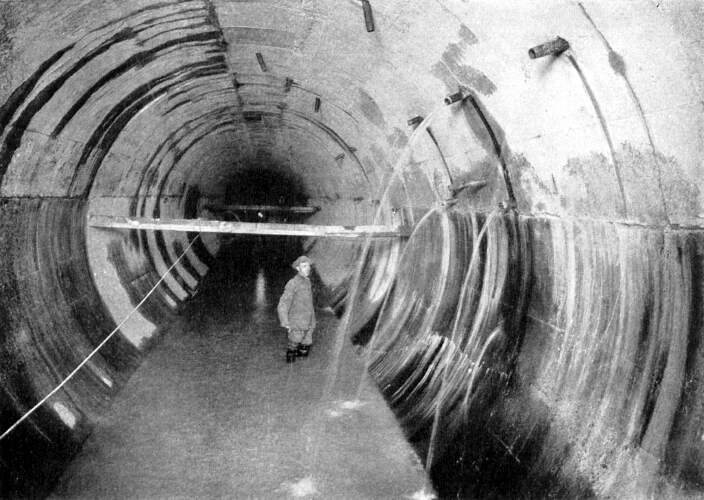
In the late 1820s, city officials decided to develop a clean and abundant water source. After carefully studying the alternatives, they chose to draw water from the Croton River.
Beginning in 1837, the creation of the first public water supply system became a massive engineering project. The construction of the aqueduct was carried out by more than 4,000 immigrant workers.
Through their diligent efforts, the Croton Dam was built at the confluence of the Croton and Hudson rivers. The dam created a large, 5-mile-long lake that covered 400 acres and held 600 million gallons of water. This unified water system served Manhattan, Queens, and The Bronx.
An equally important source of drinking water was the Old Croton Aqueduct, which was built to transport water from the Croton River to a reservoir on the site of what is now the Great Lawn in Central Park. From there, the water flowed to the Murray Hill Reservoir.
Flowing through the aqueduct purely by the force of gravity, Croton water first arrived in the boroughs in the summer of 1842. The occasion was marked in Queens with a spectacular fountain show and a parade. The Croton system provided water for the ever-growing population.
In 1885, construction began on the New Croton Aqueduct, an underground tunnel three times larger than the old one.
In 1907, work started on a new aqueduct to deliver clean water from over 100 miles away. Thousands of crews were involved in the project. The Catskill Aqueduct was finally completed in 1917 at a cost of $117 million, making it the largest water-related engineering project in the world at the time.
In 1928, the Schoharie Reservoir and the Shandaken Tunnel were created. Work then expanded to the Rondout watershed and tributaries of the Delaware River. This phase of construction was finally completed in 1937. The Delaware Aqueduct is considered the longest continuous tunnel in the world.
The modern water supply system for New York City and its boroughs consists of a network of 19 reservoirs and three controlled lakes, spread across a watershed of 1,972 square miles. The entire network has a massive capacity of 580 billion gallons.